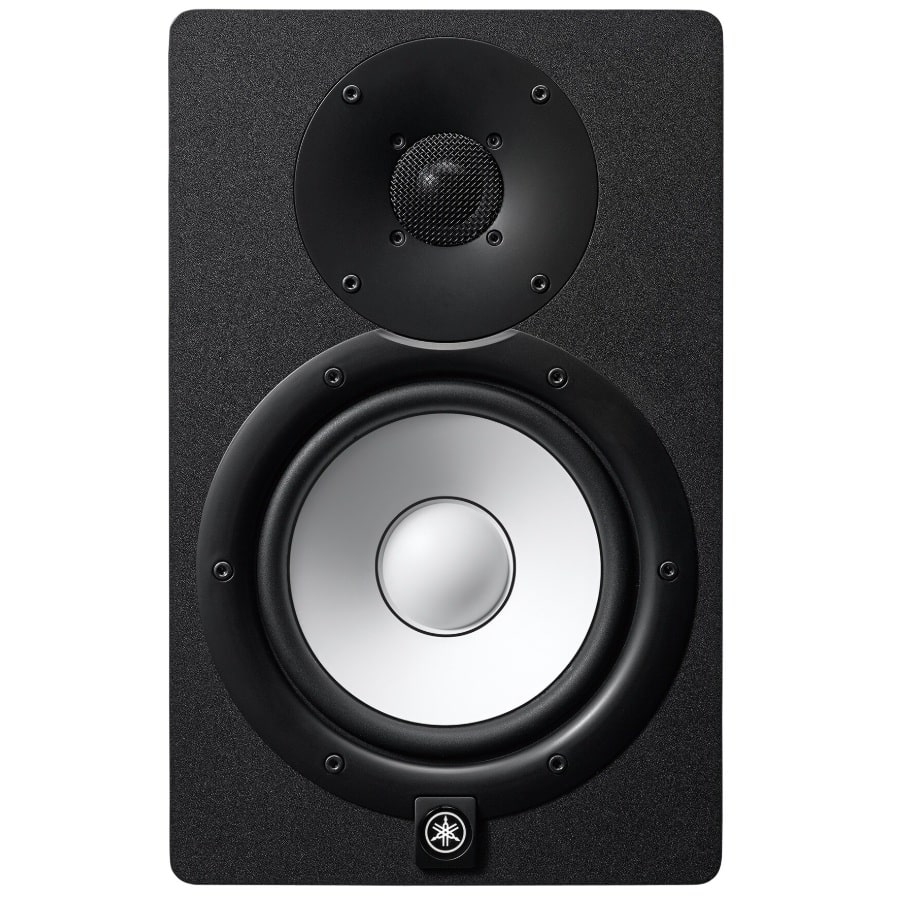
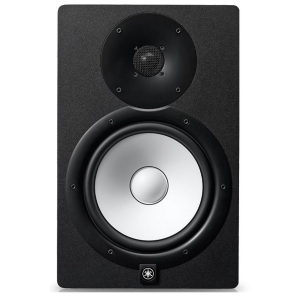
Yamaha HS7I Studio Monitor
.jpg)
.jpg)
Why Joh.deHeer?
- More than 125 years of experience
- 2500M2 Showroom
- Effective Customer Service
- Customers rate Joh.deHeer 9.5/10
- Description
- Specifications
- Graduated calculations
- Demonstration request
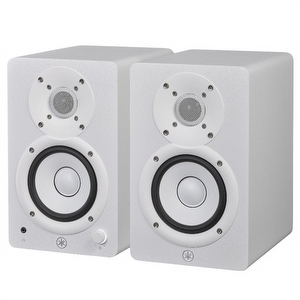
Discover the perfect combination of professional sound quality, compact design, and flexible installation options with the Yamaha HS7I, a proper classic in the world of studio monitors. This monitor offers a neutral and accurate sound that’s ideal for mixing, mastering, broadcasting, sound installations, and more.
Pure and accurate sound reflection
Thanks to the 2-way bass-reflex bi-amplified construction with a 6.5” woofer and a 1” dome tweeter you’ll enjoy a wide frequency range (43 Hz – 30 kHz) and a linear and reliable sound without any colouration, exactly what you’ll need for critical monitoring and professional audio production.
Flexible installation thanks to integrated mounting points
A big difference between the standard HS7 and this new HS7I, is that the HS7I has mounting points on all four sides. This means it’ll be easy to attach to a wall or ceiling. This is ideal for studios, shops, restaurants, installation projects, and creative spaces.
A system that adapts to your room
With ROOM CONTROL and HIGH TRIM switches you can alter the frequency response to fit your space. Consequently, you’ll always have a balanced sound, regardless of the exact location of the monitor.
Increased connectivity
Thanks to the built-in XLR and TRS (6.3 mm) inputs the HS7I accepts both balanced and unbalanced signals. This makes the system ideal for audio interfaces, mixers, keyboards, and more.
Compact and robust design
The system has a sleek design and a low-resonance MDF cabinet, which makes the system blend into every room. However, the cabinet might be small, but its sound capabilities aren’t, with a total power of 95 watt (60 W LF + 35 W HF).
Want to complete the set? You can purchase a second HSFI for a real stereo design, or combine it with a subwoofer for an extra low boost.
Technical specifications
Would you like to test this product?
Visit our store and try it out.
- Description
- Specifications
- Graduated calculations
- Demonstration request
Discover the perfect combination of professional sound quality, compact design, and flexible installation options with the Yamaha HS7I, a proper classic in the world of studio monitors. This monitor offers a neutral and accurate sound that’s ideal for mixing, mastering, broadcasting, sound installations, and more.
Pure and accurate sound reflection
Thanks to the 2-way bass-reflex bi-amplified construction with a 6.5” woofer and a 1” dome tweeter you’ll enjoy a wide frequency range (43 Hz – 30 kHz) and a linear and reliable sound without any colouration, exactly what you’ll need for critical monitoring and professional audio production.
Flexible installation thanks to integrated mounting points
A big difference between the standard HS7 and this new HS7I, is that the HS7I has mounting points on all four sides. This means it’ll be easy to attach to a wall or ceiling. This is ideal for studios, shops, restaurants, installation projects, and creative spaces.
A system that adapts to your room
With ROOM CONTROL and HIGH TRIM switches you can alter the frequency response to fit your space. Consequently, you’ll always have a balanced sound, regardless of the exact location of the monitor.
Increased connectivity
Thanks to the built-in XLR and TRS (6.3 mm) inputs the HS7I accepts both balanced and unbalanced signals. This makes the system ideal for audio interfaces, mixers, keyboards, and more.
Compact and robust design
The system has a sleek design and a low-resonance MDF cabinet, which makes the system blend into every room. However, the cabinet might be small, but its sound capabilities aren’t, with a total power of 95 watt (60 W LF + 35 W HF).
Want to complete the set? You can purchase a second HSFI for a real stereo design, or combine it with a subwoofer for an extra low boost.
Technical specifications
Would you like to test this product?
Visit our store and try it out.
BUNDLE OFFERS
(2).png "Yamaha HS7 Active Monitor")
.jpg "Adam Audio T5V Studio Monitor")
.jpg "Adam Audio T7V Studio Monitor")
(1).png "Yamaha HS5 Active Monitor")
.jpg "Yamaha HS3 Studio Monitors - Pair Black")
.jpg "Adam Audio T8V Studio Monitor")
.jpeg "{rs_getrelatedproducts.model_titel_2}")
.jpg "{rs_getrelatedproducts.model_titel_2}")
.jpg "{rs_getrelatedproducts.model_titel_2}")
.jpg "{rs_getrelatedproducts.model_titel_2}")
.jpg "{rs_getrelatedproducts.model_titel_2}")