Using Sweelinq on your organ
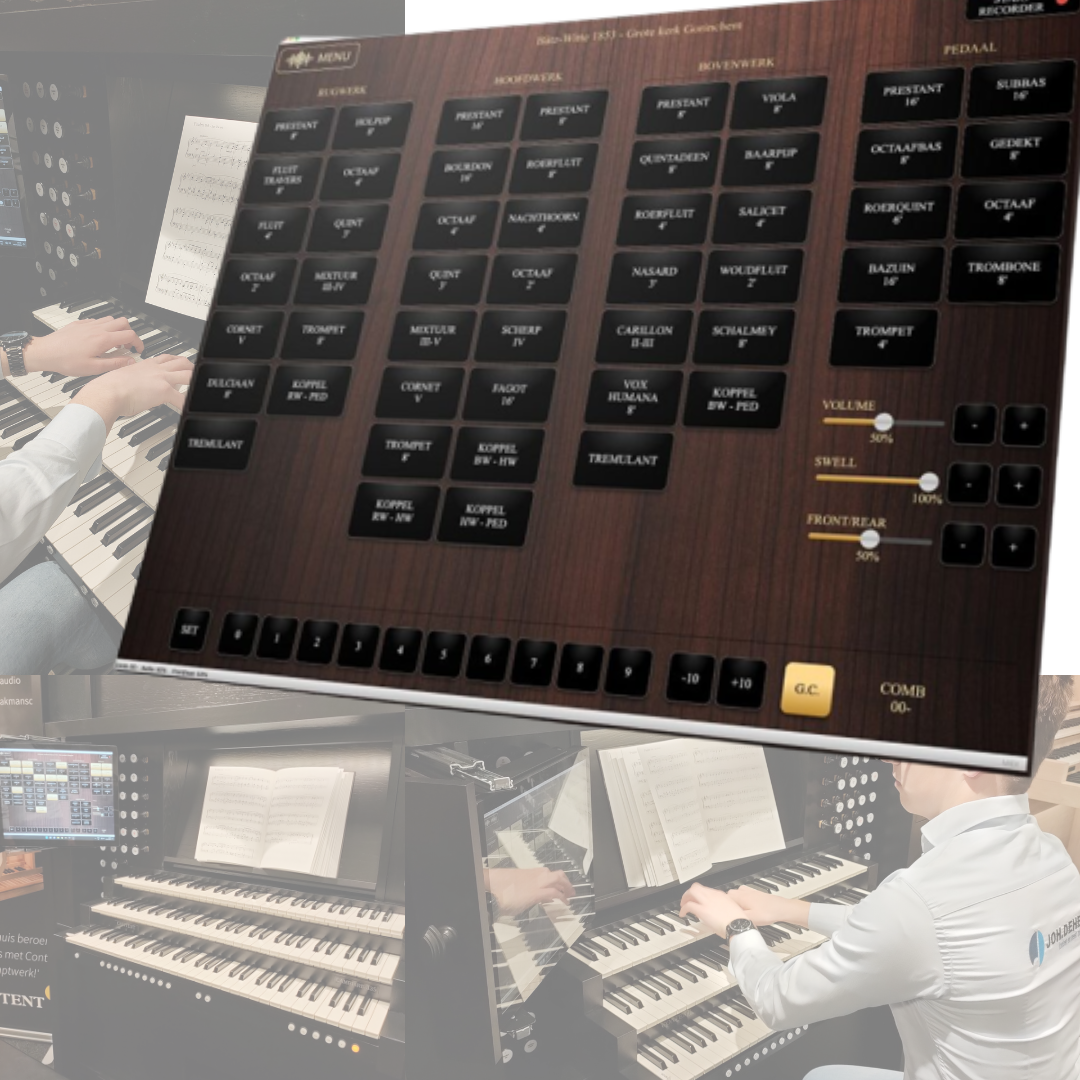
We would be delighted to tell you more about Sweelinq, a relatively young software programme that is becoming increasingly popular and has a rapidly growing, enthusiastic community of users.
At the moment, Sweelinq is working hard to challenge Hauptwerk – and may one day even dethrone it. We are seeing rising interest in the programme throughout the musical world. In this article, you can read how Sweelinq works and what you need in order to start using it yourself.
Already familiar with how Sweelinq works and looking to purchase accessories for it? Then feel free to scroll further down.
What is Sweelinq?
Sweelinq is what is known as a virtual pipe organ programme. This means that the software contains virtual versions of real pipe organs, which can be played at home. These organs – often world‑famous instruments with significant historical value – are recorded in great depth and with enormous detail. As a result, every key, stop and tonal characteristic of both the organ and the building can be reproduced in your living room.
Sweelinq is developed by Noorlander Orgels, a renowned Dutch organ builder that has worked intensively with Hauptwerk for many years. Since developing its own software, Noorlander increasingly equips new digital organ projects with Sweelinq, both for private users and professional applications.
There are currently twenty different organs available within Sweelinq. These include, among others, the Kam organ of the Grote Kerk in Dordrecht and the Bätz‑Witte organ of the Grote Kerk in Gorinchem. Organs from France and Germany are also available, such as the Mathis organ (1997–2024) in the Peterskirche in Görlitz (Germany) and the Kleuker organ (1978) in the Notre‑Dame des Neiges in L’Alpe d’Huez (France). The collection continues to grow: two additional organs are currently in development and will be added in due course.
What are the differences between Hauptwerk and Sweelinq?
It is only natural that Hauptwerk (Milan Digital Audio) and Sweelinq (Noorlander) are frequently compared. Hauptwerk has dominated the virtual pipe organ market for many years, while Sweelinq is now attempting—after years of limited competition—to challenge Hauptwerk’s leading position. There are several important differences worth considering.
Sweelinq provides full access to a large library of digital organs via a simple subscription model, without the need to purchase individual organ sets or install different versions. You can try the software free for 14 days before taking out a subscription.
The Standard subscription costs €10.99 per month with a yearly plan (€131.88 per year), or €12.99 with monthly billing. It gives you unlimited access to all organs in the Sweelinq library, including highly realistic samples, free software updates and the ability to install the software on any computer.
The Premium subscription costs €14.99 per month with a yearly plan (€179.88 per year), and in addition to all Standard features, offers extra functions to enhance playability—such as an extended keyboard range, 96 kHz HD audio playback and the ability to add additional couplers. These features are currently in development and will offer even greater flexibility and quality for advanced players.
Hauptwerk is available both as a perpetual licence and as a subscription. The current version is Hauptwerk 9. A permanent licence is a significant investment: the Lite edition costs around €225 and the Advanced edition roughly €540. Monthly subscriptions cost about €11.70 for Lite and €27.00 for Advanced. Advanced offers all features, while Lite is more limited.
Hauptwerk loads all samples into memory. For small to medium‑sized organs, 16–24 GB RAM is usually sufficient, but large instruments often require 32–64 GB or more. Anyone wishing to use several large organs simultaneously will benefit from powerful hardware. Sweelinq also requires capable hardware, but its system demands are slightly lower: around 16 GB RAM is recommended, making overall hardware costs generally somewhat lower.
At present, Hauptwerk still offers more possibilities, thanks in part to its long development history and large user community. There is also extensive documentation available online.
Future development of Sweelinq
Sweelinq, however, is growing rapidly and is regularly expanded with new organs and features. The software is increasingly used by hobbyists as well as professional keyboardists. Thanks to ongoing development, Sweelinq has become a serious alternative to Hauptwerk, offering users continuous improvements, a richer playing experience and more modern technology.
But what do you actually need to start using Sweelinq?
 Naturally, you may wonder what is required to use Sweelinq with your own organ. First of all, you will of course need an organ. Sweelinq also requires MIDI, as the organ must be able to communicate with other digital (computer) devices. How can you check whether your organ has MIDI? It should have two or three round five‑pin connections, like the ones shown on the right.
Next, a few things are important to determine when preparing to use Sweelinq with your organ. As you may expect, you need a computer to run the Sweelinq software and to make your setup possible. We recommend a computer equipped with at least an Intel Core i3 processor (or equivalent), 16 GB RAM and 256 GB SSD storage. Anything more powerful—such as a Core i5 or Ryzen 5—is beneficial and recommended for an optimal playing experience. Noorlander also advises using a modern operating system such as Windows 11 or macOS 13.
A connection must be made between your organ and your computer, transmitting the organ’s signals to Sweelinq and routing audio from the computer to speakers or back into the organ. This requires an audio interface. For Sweelinq, we recommend a USB audio interface, which can connect to your organ’s MIDI ports and convert them into USB signals for your computer. It is also practical to choose an interface with at least four audio outputs (at least double stereo), allowing you to connect both the organ (if needed) and external speakers.
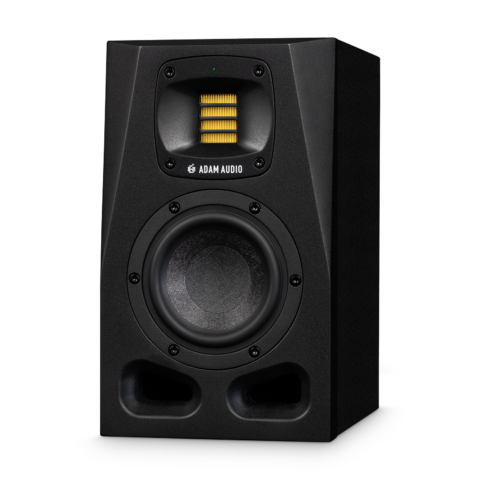 Additional speakers are not strictly necessary for using Sweelinq, but we do recommend them. Speakers designed for organs are powerful, professional units that are better suited to reproducing Sweelinq’s high‑quality audio. As a result, they offer a far better listening experience than using only the organ’s built‑in speakers. Alternatively, you can choose a high‑quality pair of headphones that immerses you in the stunning sound of historic churches.
In short: don’t compromise on the audio experience!