
Why won't my guitar stay in tune?

Inleiding
It can be frustrating: you carefully tune your guitar, start playing, and soon notice it already sounds out of tune again. However, this is not a sign that something is wrong with your instrument. In fact, it is part of every guitar. Strings, wood and tension are constantly in motion, and this directly affects your guitar’s tuning. On this page, we explain why this happens and what you can do to keep your guitar as stable in tune as possible.
Why won't my guitar stay in tune?
Does your guitar struggle to stay in tune, even after tuning carefully? That's actually very normal. A guitar is constantly under tension. Through use, temperature changes, and the behaviour of the strings and wood, that tension shifts slightly over time. As a result, a guitar needs to be retuned regularly.
Quick check
-
Are the strings new or worn?
-
Have they been wound correctly?
-
Has the guitar recently experienced a change in temperature?
-
Do you feel resistance while tuning?
In many cases these are the causes.
Most common causes
| Problem | How to recognise it | Solution |
|---|---|---|
| New strings | Tuning drops quickly after tuning | Stretch the strings and retune |
| Poorly wound strings | Tuning remains unstable | Rewind the strings (2–4 turns) |
| Old strings | Dull sound, poor intonation | Replace the strings |
| Friction (nut/bridge) | A clicking sound when tuning, sudden changes in tuning | Let the string move freely or use graphite |
| Temperature changes | Out of tune after moving the guitar or after longer periods of not playing | Always check and retune |
| Worn tuning machines | Tuning peg feels loose | Replace the machine heads |
Practical solutions
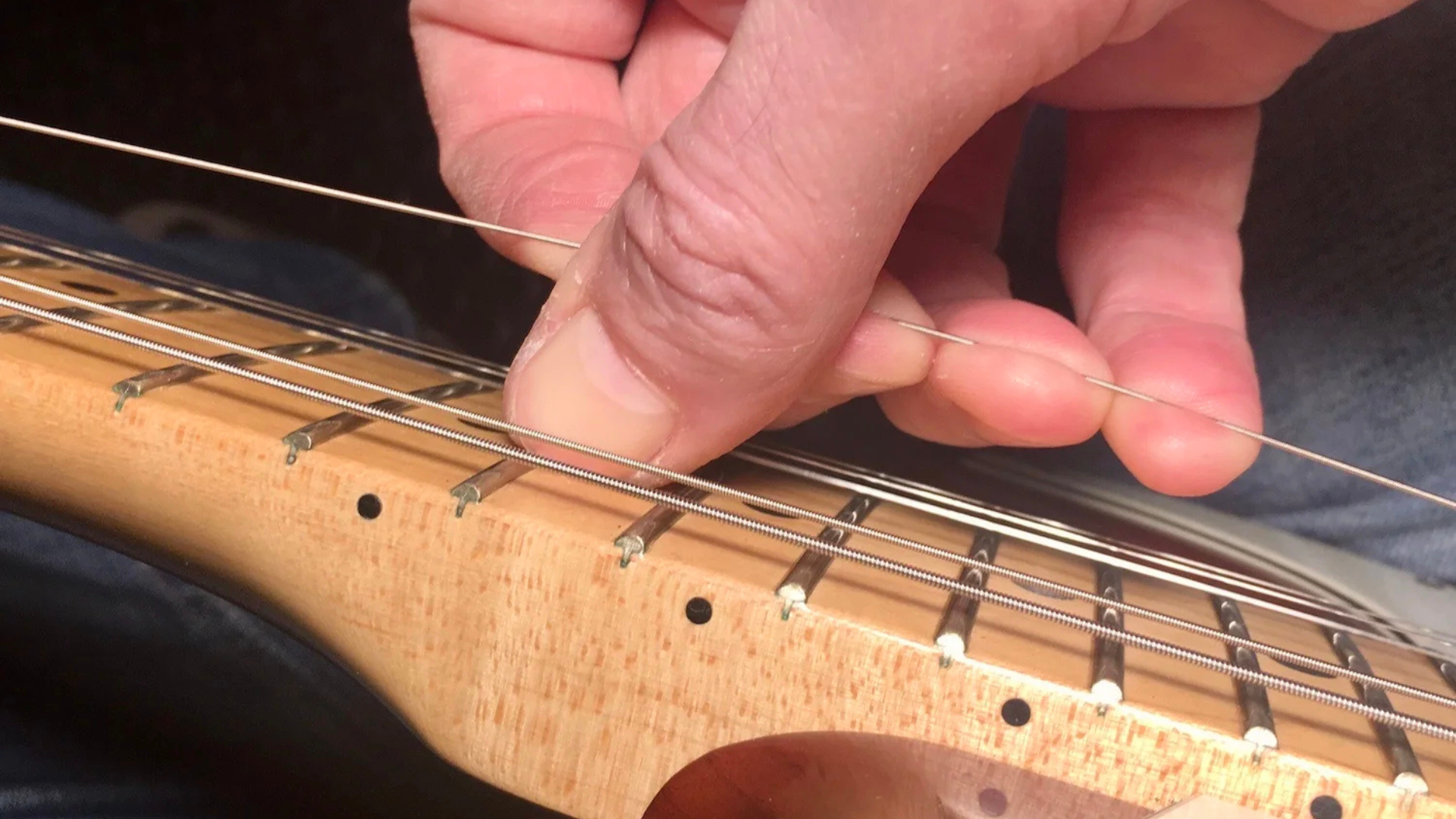
Stretch new strings
New strings will continue to lengthen. Gently pull them upwards a few times after fitting, then retune until the tuning becomes more stable.
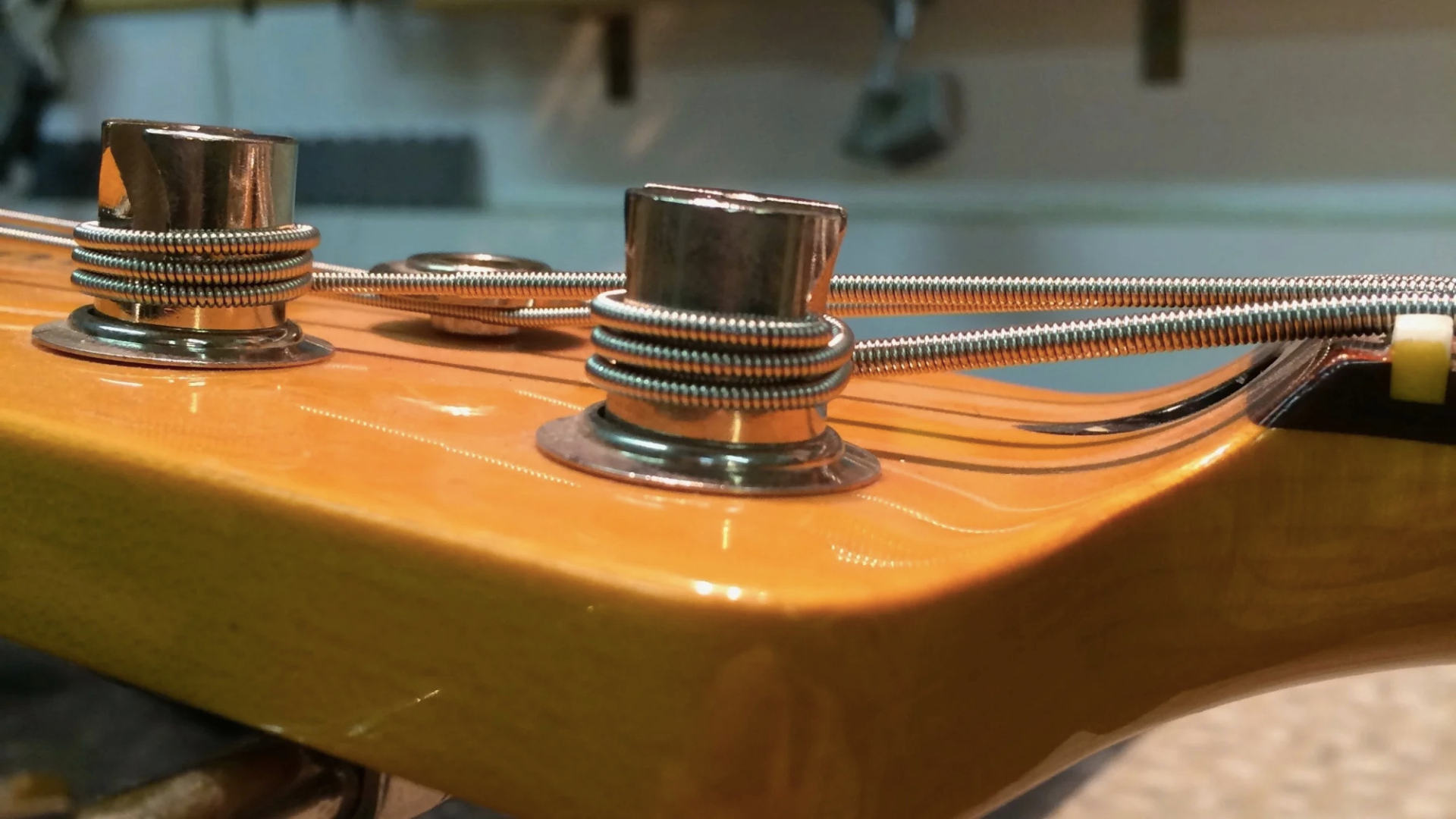
Wind your strings correctly
Ensure 2 to 4 windings around the tuning post. Let the windings run neatly downwards for maximum stability.
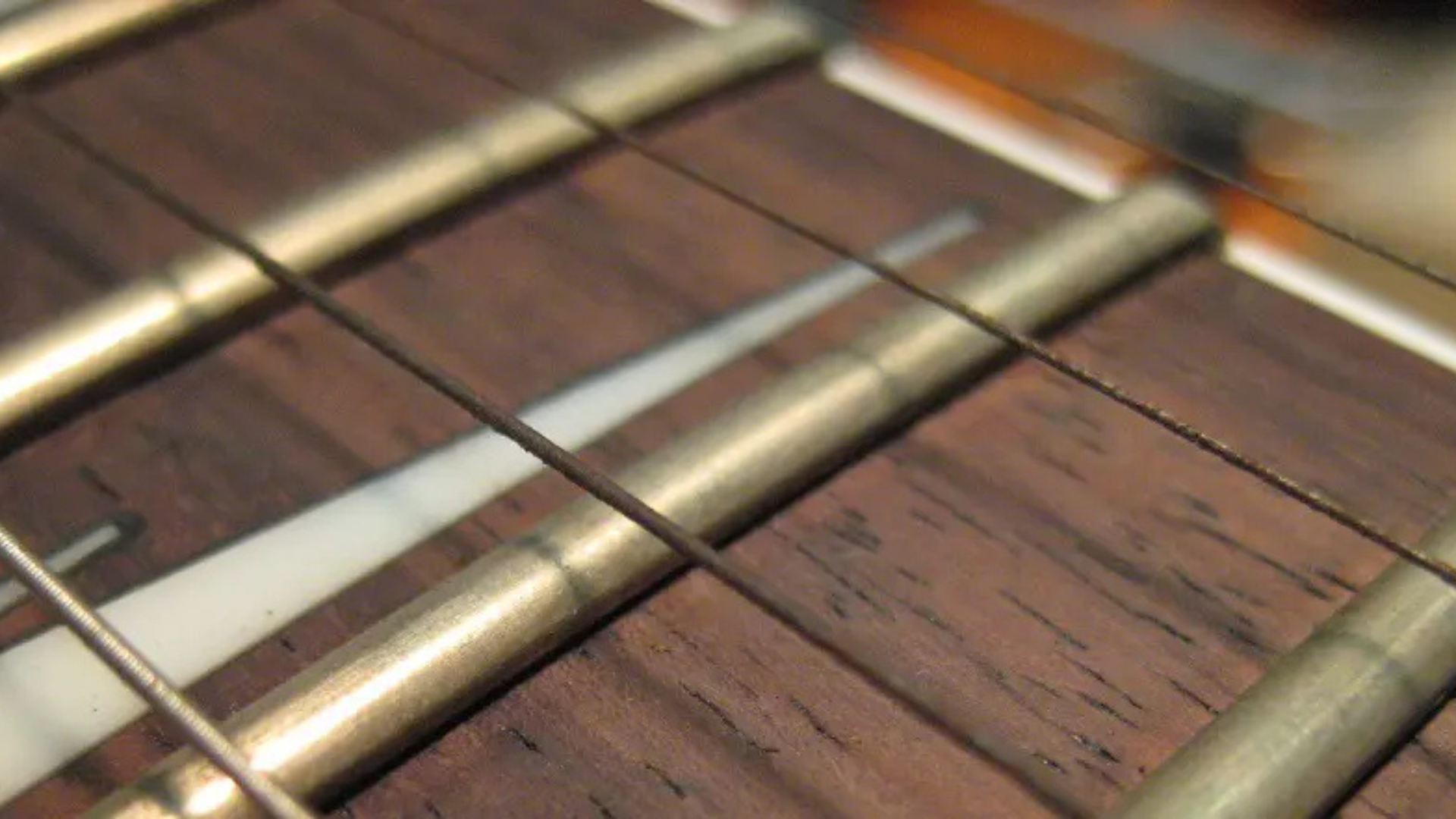
Replace your strings in time
Old strings lose their elasticity and respond less predictably to tension. They will also start to sound dull and may corrode. Replacing them regularly improves both sound and tuning stability.
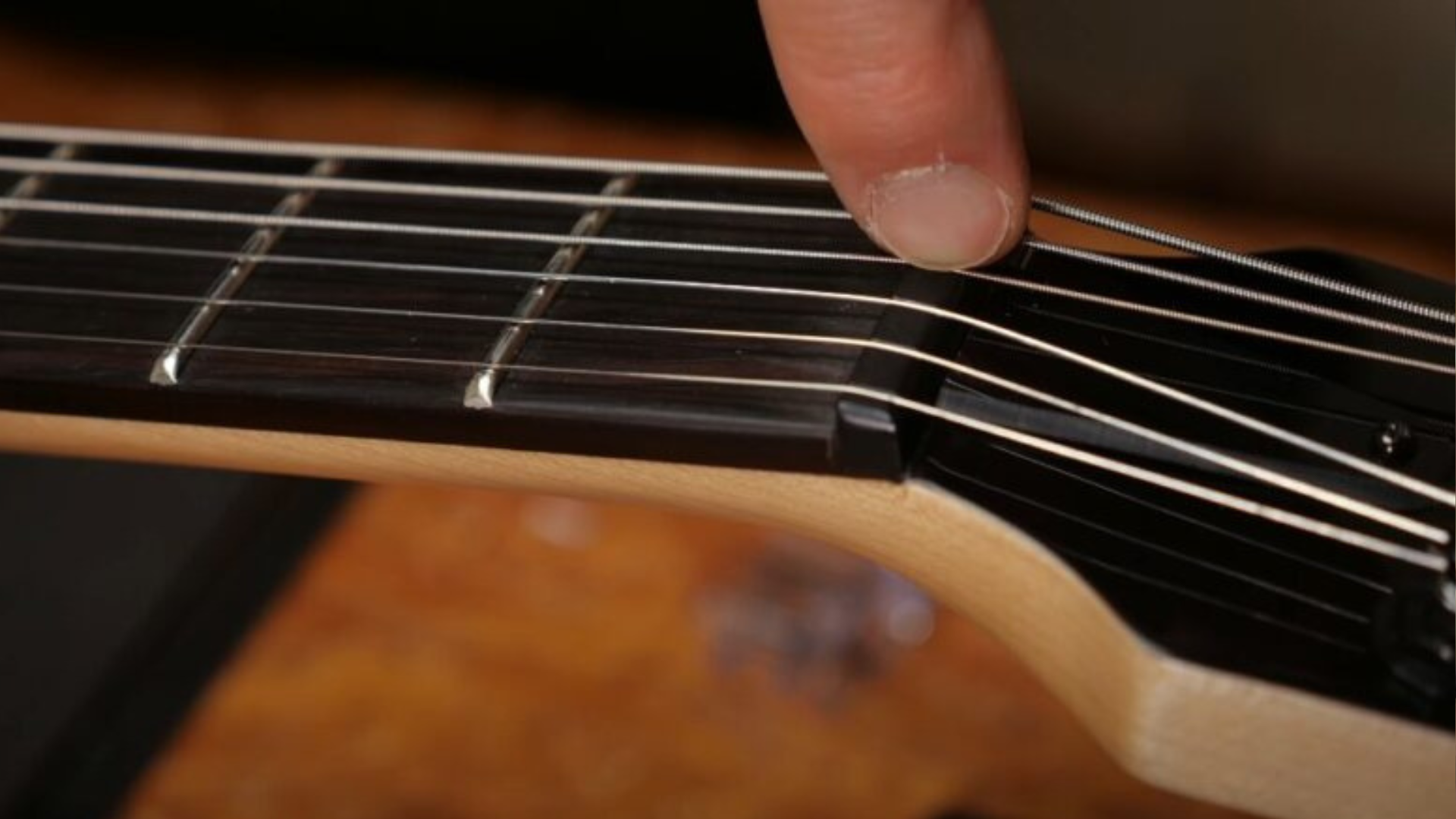
Check the nut and bridge
A string should be able to move freely. If it catches somewhere, the tuning may jump unexpectedly. A small amount of graphite can reduce friction.
Use an accurate tuner
A quality tuner helps you tune more consistently and accurately.
Have your guitar poperly set up
If your guitar remains unstable, a setup is often the solution. This involves checking and adjusting the neck, string height and contact points.
Extra factor: tremolo‑bridge
- Light use: usually stable
- Heavy use: more frequent retuning required
- Poor setup: quickly unstable
A proper setup is especially important in this case.
When should you have it checked?
- a neck that is not properly adjusted
- wear on the nut or machine heads
- a string gauge that is not suitable for the guitar
At Joh. de Heer, we are happy to help. Sometimes a small adjustment is all that is needed; in other cases, a full setup may be required. This ensures your guitar performs as stably as possible.