Yamaha HS5, HS7, HS8 or ADAM Audio T7V? Which Studio Monitor Is Right for Your Home Studio?
.png "Yamaha HS5, HS7, HS8 or ADAM Audio T7V? Which Studio Monitor Is Right for Your Home Studio? - designer_(7)")
Yamaha HS5, HS7, HS8 or ADAM Audio T7V? Which Studio Monitor Is Right for Your Home Studio?
Looking for a good studio monitor for your home studio? Then you'll quickly come across the Yamaha HS5, Yamaha HS7, Yamaha HS8 and ADAM Audio T7V. These models have been among the most popular studio monitors for producers, musicians, content creators and aspiring audio engineers for many years. The monitor that suits you best depends mainly on the size of your room, how much low-end response you need and what you will be using the monitors for. In a small room, a compact monitor is often the most sensible choice, while larger spaces can benefit from additional bass response and greater headroom.
Comparing the Yamaha HS5, HS7, HS8 and ADAM Audio T7V
| Model | Woofer | Key strengths | Best suited for |
|---|---|---|---|
| Yamaha HS5 | 5-inch | Compact, neutral sound, highly controlled midrange | Small studios, mixing |
| Yamaha HS7 | 6.5-inch | Excellent balance between size and bass response | All-round production and mixing |
| Yamaha HS8 | 8-inch | Powerful low-end, high headroom and a large soundstage | Larger rooms, EDM and hip-hop |
| ADAM Audio T7V | 7-inch | Detailed high frequencies, wide stereo image, powerful bass | Production, mixing and content creation |
What Should You Consider When Choosing a Studio Monitor?
The size of the woofer plays a major role in determining how much bass a monitor can reproduce. However, bigger is not automatically better. In our showroom, we regularly notice that producers assume an 8-inch monitor is always the best choice. In smaller rooms, however, the additional bass can often create unwanted resonances, making critical mix decisions more difficult.
In addition to woofer size, the following factors are also important:
- The size of the room
- Listening distance
- Room acoustics
- Monitor placement
- The type of music you produce
Good studio monitors perform at their best when positioned at ear level and set up symmetrically relative to the listening position.
 Yamaha HS5: The Best Choice for Small Studios
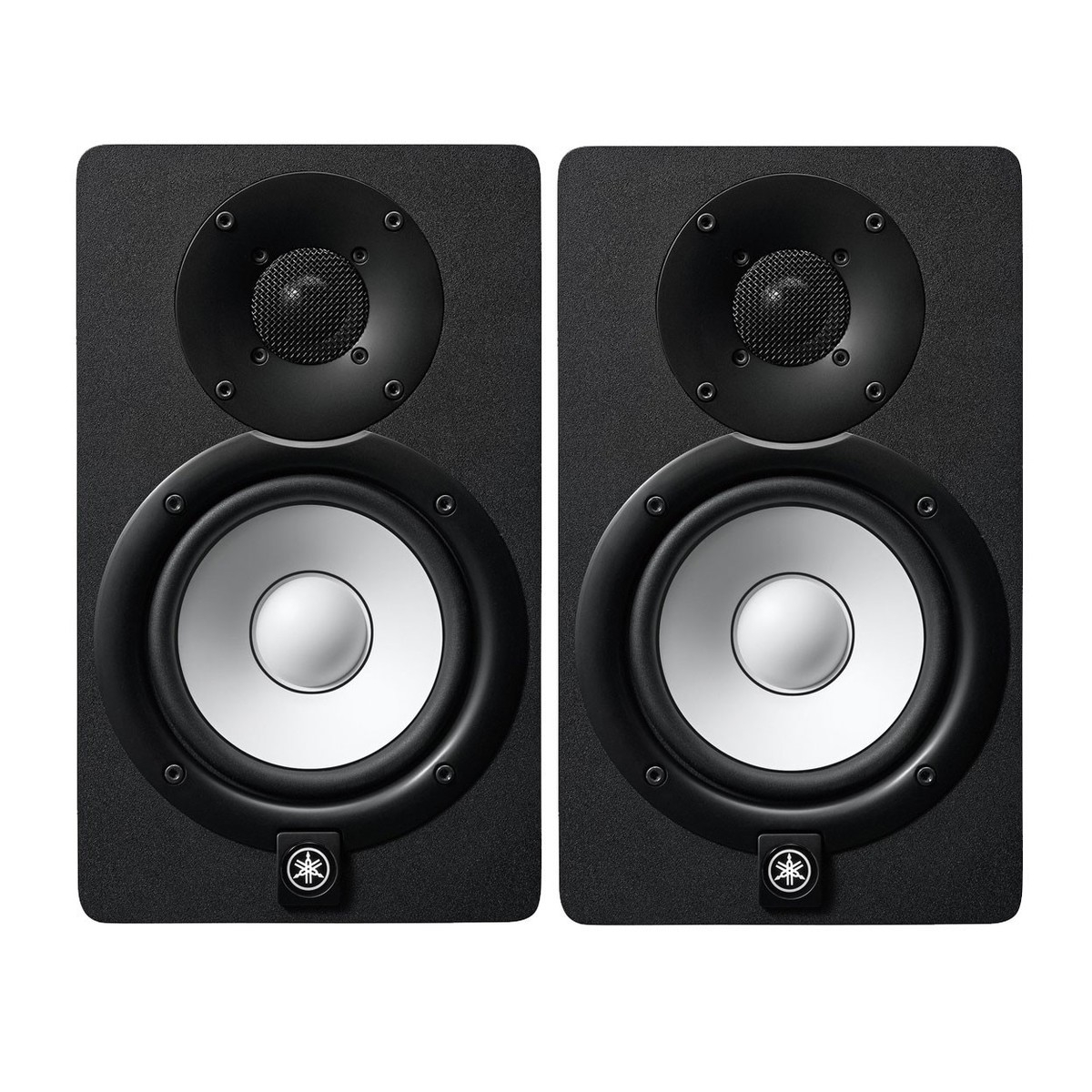
The Yamaha HS5 is one of the most widely used studio monitors for home studios. Thanks to its 5-inch woofer, the bass remains controlled and manageable, making it particularly suitable for smaller rooms. The HS5 is known for its honest and neutral character. Small mistakes in a mix become immediately noticeable. This is precisely why it is so popular with producers who want to mix accurately.
Who Is the Yamaha HS5 Suitable For?
The HS5 is an excellent choice if you:
- Work in a small bedroom or home studio
- Focus mainly on mixing
- Are looking for a neutral reference monitor
- Work at a short listening distance
Yamaha HS7: The Most Popular All-Round Studio Monitor
For many producers, the Yamaha HS7 offers the ideal middle ground. Its 6.5-inch woofer delivers noticeably more bass response than the HS5 without becoming as dominant as larger monitors. Among customers who both produce and mix music, the HS7 is often one of the most popular choices. You benefit from greater low-end energy while maintaining excellent usability in average-sized home studios.
Why Choose the Yamaha HS7?
The HS7 is worth considering if you:
- Produce a range of musical styles
- Want more bass response than the HS5 provides
- Need a monitor that is suitable for both production and mixing
- Have a medium-sized room
Yamaha HS8: Maximum Bass Response and Headroom
The Yamaha HS8 is designed for producers who want greater control over low frequencies. Thanks to its 8-inch woofer, this monitor produces significantly more bass than the HS5 and HS7. For genres such as EDM, house, techno, trap and hip-hop, this can be a major advantage. Kick drums, sub-bass elements and low synthesiser sounds become easier to hear, allowing for more confident mixing decisions. However, a larger monitor also requires a larger room. In smaller spaces, the increased bass output can create problems if the acoustics have not been treated properly.
When Is the HS8 a Smart Choice?
The HS8 is a good match if:
- You work extensively with sub-bass frequencies
- You have a larger studio space
- You are looking for more volume and headroom
- You produce EDM, hip-hop or electronic music
ADAM Audio T7V: Exceptional Detail and a Wide Stereo Image
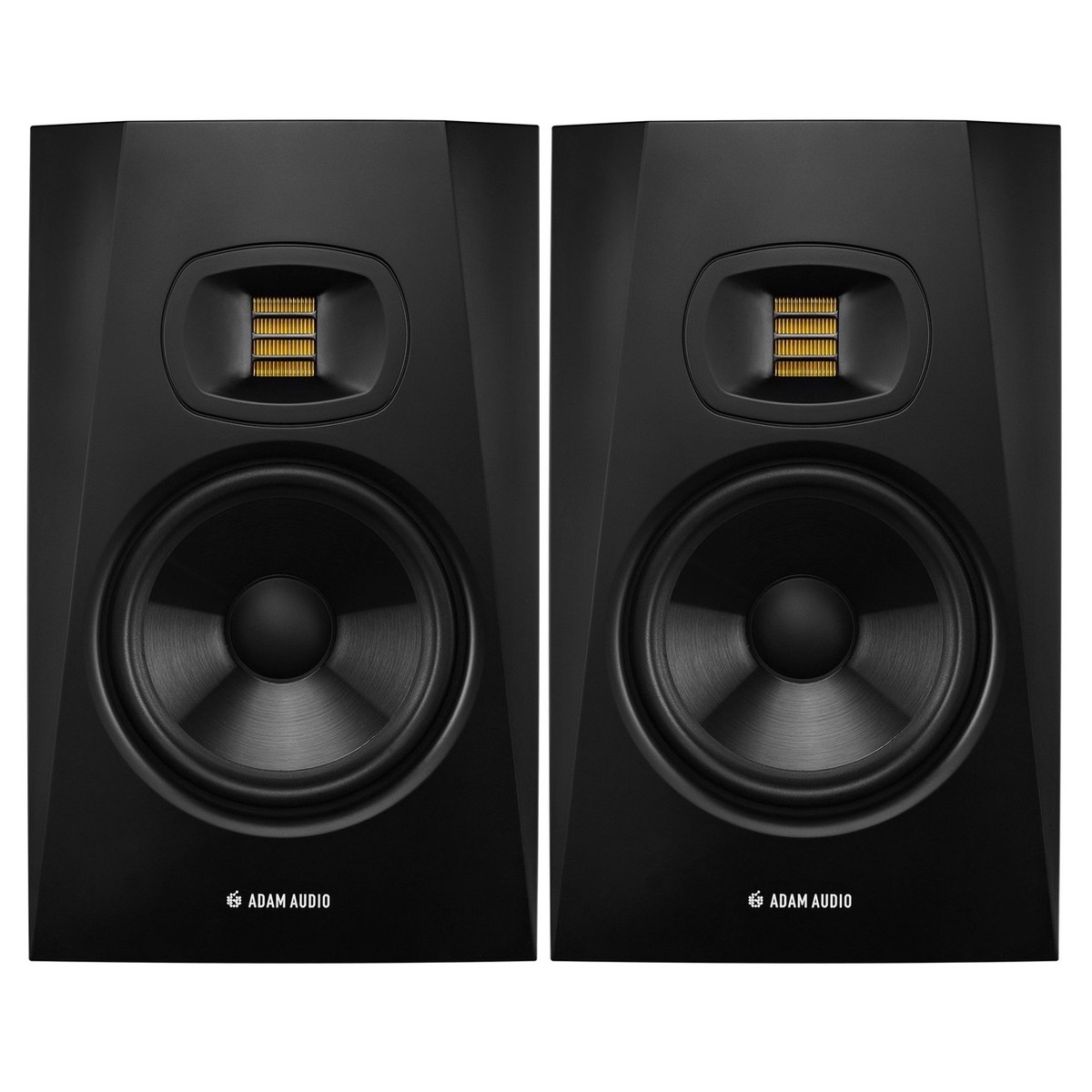
The Adam Audio T7V stands apart from the Yamaha HS series thanks to its U-ART ribbon tweeter. This tweeter is well known for delivering highly detailed high frequencies and a wide sweet spot. Many producers find the T7V slightly more spacious sounding than the Yamaha models. Details within reverbs, effects and stereo imaging are often easier to detect. As a result, the T7V is popular among producers, mixing engineers, video editors and content creators. In addition, the 7-inch woofer provides powerful bass reproduction, meaning a subwoofer is not immediately necessary in many home studios.
Why Choose the ADAM Audio T7V?
The T7V is an excellent option if you:
- Value detailed high-frequency reproduction
- Want a wide stereo image
- Produce electronic music
- Need a powerful all-round monitor
Which Studio Monitor Best Suits Your Music Style?
| Music style | Recommended monitor |
|---|---|
| EDM / House | Yamaha HS8 or ADAM Audio T7V |
| Hip-hop | Yamaha HS8 or ADAM Audio T7V |
| Techno | Yamaha HS8 or ADAM Audio T7V |
| Pop | Yamaha HS7 or ADAM Audio T7V |
| Rock | Yamaha HS7 or Yamaha HS8 |
| Singer-songwriter | Yamaha HS5 or Yamaha HS7 |
| Podcasting | Yamaha HS5 |
| Content creation | Yamaha HS5, HS7 or T7V |
5-Inch, 7-Inch or 8-Inch Studio Monitor?
A common question is whether a larger studio monitor automatically sounds better. In practice, this is not the case. A 5-inch monitor such as the Yamaha HS5 often performs better in small rooms because it creates fewer low-frequency issues. Larger monitors such as the HS8 provide more depth and power, but they also require a room large enough to handle that additional energy effectively. For many home studios, a 6.5-inch or 7-inch monitor offers the best balance between size, bass response and ease of placement.
Practical Advice for Most Home Studios
If you work in a typical bedroom studio or home workspace, the Yamaha HS7 is the safest choice for most users. It delivers more bass than the HS5 without running into the room-related limitations that can come with the HS8. If you are looking for a highly analytical monitor for mixing, the Yamaha HS5 remains an excellent option. If you want greater spaciousness, a wide stereo image and exceptional high-frequency detail, the ADAM Audio T7V is one of the most attractive monitors in its price range.
Frequently Asked Questions About the Yamaha HS5, HS7, HS8 and ADAM Audio T7V
Which studio monitor is best for a small home studio?
For smaller rooms, the Yamaha HS5 is often the most logical choice. Its compact 5-inch woofer helps avoid many issues caused by excessive low frequencies.
Is the Yamaha HS7 better than the HS5?
Not necessarily. The HS7 provides more bass response, but in a small room the HS5 may actually deliver greater accuracy.
Is the Yamaha HS8 suitable for a bedroom studio?
That depends on the size and acoustics of the room. In many small bedrooms, the HS8 can produce too much bass.
Does the ADAM Audio T7V sound better than the Yamaha HS7?
This largely comes down to personal preference. The T7V offers greater high-frequency detail and a wider stereo image, while the HS7 is known for its neutral character.
Do I need a subwoofer with the HS5?
Not always. For most home studios, proper monitor placement is more important than adding a separate subwoofer.
Which monitor is most suitable for EDM and house music?
For EDM and house, the Yamaha HS8 and ADAM Audio T7V are the most commonly chosen models due to their stronger bass response.
Are Yamaha HS monitors active monitors?
Yes. The HS5, HS7 and HS8 are active studio monitors with built-in amplifiers.
How far apart should studio monitors be placed?
Most producers work with an equilateral triangle setup, where the distance between the two monitors is roughly equal to the distance from each monitor to the listening position.
Conclusion: Yamaha HS5, HS7, HS8 or ADAM Audio T7V?
The right studio monitor depends primarily on your room and the way you work. The Yamaha HS5 is ideal for small studios and precise mixing work. The Yamaha HS7 is the best all-round choice for many producers. The Yamaha HS8 delivers greater bass response and headroom for larger spaces, while the Adam Audio T7V excels in detail, stereo imaging and versatility. For the average home studio, the Yamaha HS7 is often the most balanced option. If maximum high-frequency detail is your priority, the ADAM Audio T7V certainly deserves a place at the top of your shortlist.